

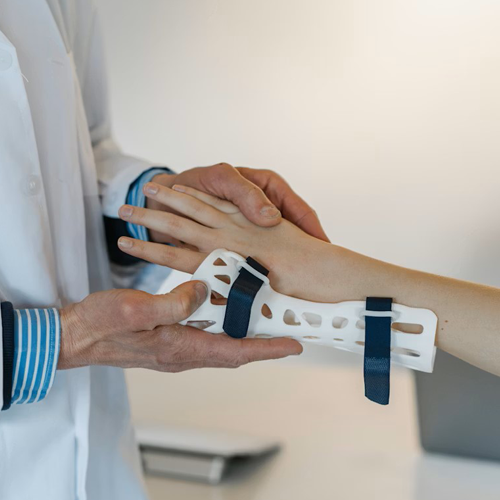
In the world of DME audits, some billing patterns are so unusual that after enough exposure, they begin to feel less like isolated reimbursement issues and more like recurring business models.
Our team routinely reviews claims that raise concerns far beyond simple coding errors. These are not cases of an occasional wrong modifier or an accidentally inflated supply charge.
These are patterns.
And when patterns repeat often enough, especially across multiple entities with suspicious similarities, deeper questions naturally follow.
Meet the “Frequent Flyers”
Among the more concerning scenarios we encounter are clusters of DME suppliers operating under remarkably similar names, often billing for costly equipment with questionable medical necessity.
Imagine a prescribing provider named Peter Parker.
Then imagine associated DME suppliers with names such as:
- Parker DME
- Parko Medical Supply
- PetePark Equipment Solutions
While fictionalized here for obvious reasons, the real-world parallels can be difficult to ignore.
Coincidence? Perhaps.
But when multiple similarly named companies repeatedly bill for expensive equipment tied to one provider, SIU instincts tend to activate.
Specialty Mismatch: An Additional Layer of Curiosity
What makes these cases even more eyebrow-raising is that the prescribing provider’s specialty often appears clinically disconnected from the equipment prescribed.
For example, a physician assistant associated with an OB/GYN setting is not typically the provider most patients envision when seeking post-accident orthopedic equipment, osteogenesis stimulators, or advanced rehabilitation devices for musculoskeletal trauma.
Yet somehow, these prescriptions appear. Repeatedly.
This mismatch between provider specialty and DME complexity can suggest that the clinical pathway may deserve closer examination.
Because while medicine certainly involves interdisciplinary care…
OB/GYN to high-cost orthopedic DME pipeline is not exactly standard practice.
The Devices: Expensive, Specialized, and Often Hard to Justify
Our team frequently reviews claims involving advanced equipment such as:
- Osteogenesis stimulators (intended for severe non-healing fractures or failed fusions)
- Pneumatic compression devices (typically associated with vascular or circulatory disorders)
- Custom-fitted post-surgical braces
- High-end orthopedic immobilization devices
And what diagnoses are these often paired with?
- Sprains
- Strains
- Minor shoulder pain
- Soft tissue injuries
- General musculoskeletal discomfort
In other words: Conditions that typically do not require highly specialized, multi-thousand-dollar intervention.
The Bilateral “Airplane Brace” Case
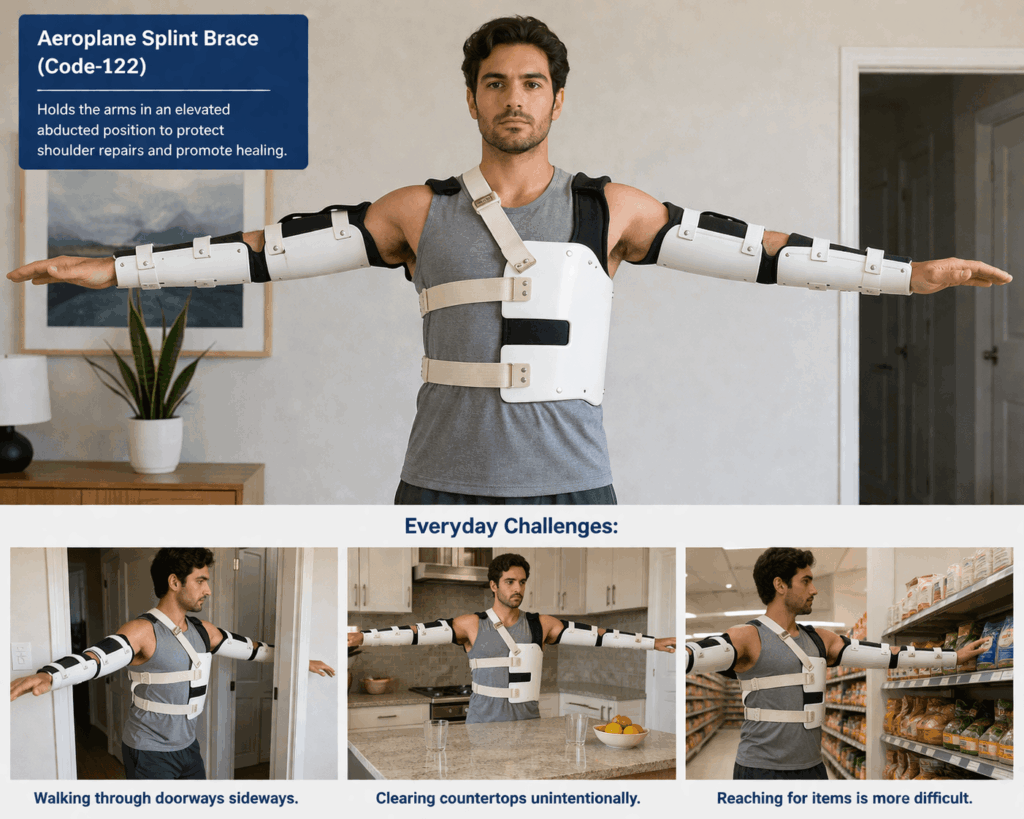
One particularly memorable example involved a patient with documentation supporting a single shoulder complaint.
Straightforward enough.
Yet across multiple dates of service, the provider billed for:
Two custom-fitted shoulder abduction braces (HCPCS L3674)
One for each arm.
For those unfamiliar, abduction braces are substantial post-surgical devices that hold the arm elevated away from the body in a fixed position—often resembling a rigid “airplane wing” posture.
So naturally, we couldn’t help but wonder: if only one shoulder injury was documented, why did the patient allegedly require bilateral immobilization?
Even more conveniently, the diagnosis coding utilized vague terminology such as:
“Unspecified shoulder pain”
No laterality.
No specificity.
No clear explanation.
Just enough ambiguity to potentially avoid immediate scrutiny.
Until, of course, all claims were reviewed collectively.
At which point the scenario became increasingly difficult to explain without picturing the patient navigating daily life like a human aircraft.
Walking through doorways sideways.
Clearing countertops unintentionally.
Potentially becoming an OSHA hazard in retail settings.
Humorous imagery aside, the billing inconsistency was significant.
Why These Patterns Matter
Phantom billing concerns may involve:
- Shell company structures
- Coordinated provider relationships
- Medical necessity inflation
- Duplicate or excessive equipment claims
- Vague diagnostic coding
- Potential concealment strategies
When analyzed individually, some claims may appear merely unusual.
But when reviewed collectively, broader operational concerns may emerge.
This is precisely why comprehensive coding audits remain essential.
Final Thoughts from our Claims Review Desk
Not every unusual claim represents fraud.
But repeated patterns involving:
- Similar corporate naming structures
- Specialty mismatches
- Expensive DME for minor injuries
- Vague diagnoses
- Excessive bracing
- Multiple questionable suppliers
…deserve careful attention.
Because when a single shoulder sprain somehow evolves into bilateral custom airplane braces billed through suspiciously connected suppliers, it may be time to ask whether the treatment plan is truly medical—
Or whether the billing strategy simply has wings.